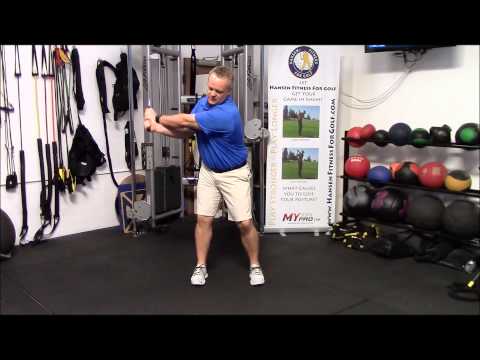
Curated Routine

3 Stretches for More Shoulder Turn in Your Golf Swing!

GolfMobility & Recovery
Training ~5 minStart follow-along — free, no signup
Created from “3 Stretches for More Shoulder Turn in Your Golf Swing!” by HansenFitnessForGolfWatch original

3 Stretches for More Shoulder Turn in Your Golf Swing! is a curated workout routine with 3 ordered actions and 3 short form clips. Start with Cross-Grip Lead Arm Backswing Shoulder Stretch and Flipped Club Cross-Handed Posture Turn Stretch. Review the available targets, sets, coaching cues and rest for each action. Estimated training time is about 5 min; rest is listed per action.

Training ~5 minOriginal video 2:533 actionsSingle training session
Start this session

Follow in order

Action Sequence

Browse all actions
0:00 / 0:20
1

Cross-Grip Lead Arm Backswing Shoulder Stretch

Sets: 1Duration: 45 secRest: 1 minClip: 20 sec

A dynamic stretch targeting the rear deltoid and posterior shoulder/scapular mobility by taking a cross grip with the golf club and simulating a backswing turn.

Before you start

  • Stand upright holding a golf club.
  • For a right-handed golfer, place the left hand low on the club grip.

Movement sequence

  1. Take a cross grip on the golf club with the left hand positioned low.
  2. Simulate a backswing motion, rotating your torso and upper body.
  3. Use your right hand to push up as high as you can during the backswing turn.

Key points

  • Feel a deep stretch in the rear deltoid and muscles in the back of the shoulder.
  • Ensure proper rotation mimicking the lead arm position during a golf backswing.

Common mistakes

Failing to perform the stretch on both sides. Not applying upward pressure with the supporting hand.

Practice notes

Perform on both sides to maintain balanced mobility, even though the backswing is emphasized. Integrate this stretch to help achieve a straight left arm and greater shoulder turn.

0:00 / 0:18
2

Flipped Club Cross-Handed Posture Turn Stretch

Sets: 1Duration: 45 secRest: 1 minClip: 18 sec

A thoracic rotation and shoulder stretch performed in a golf posture using a flipped club with a cross-handed grip to accurately emulate the lead arm position in the swing.

Before you start

  • Hold the golf club and flip it over.
  • Place your left hand under and your right hand over the club.

Movement sequence

  1. Flip the golf club and adopt a cross-handed grip (left hand under, right hand over).
  2. Hinge down into your athletic golf posture.
  3. Perform the rotational backswing stretch while maintaining your golf posture.

Key points

  • Body is correctly hinged in golf posture before initiating rotation.
  • Left arm and shoulder positions closely mimic the biomechanics of the actual golf swing.

Common mistakes

Standing too upright instead of getting down into proper golf posture. Incorrect hand placement on the flipped club.

Practice notes

Combine with thoracic mobility exercises to improve overall shoulder turn. Perform bilaterally to ensure proper extension and flexibility on both sides of the body.

0:00 / 0:37
3

Pole / Golf Cart Latissimus Dorsi Static Stretch

Sets: 1Duration: 45 secRest: 1 minClip: 37 sec

A static overhead reach and lat stretch utilizing a structural pole or golf cart to lengthen the latissimus dorsi muscle along the side of the body.

Before you start

  • Stand near a vertical pole or a golf cart.
  • Hinge at the hips in a slight forward bend posture.

Movement sequence

  1. Grab the pole or golf cart structure with your hand at overhead reach level.
  2. Hinge at the hips and shift your weight to allow a deep stretch along the side of your body.
  3. Hold the static stretch for the recommended duration.

Key points

  • Feel an intense stretch specifically in the lat muscle down the side of the torso.
  • Maintain a stable hinge posture while holding onto the pole/cart.

Common mistakes

Holding the stretch for too short a time. Only stretching one side instead of performing it on both sides.

Practice notes

Hold the static stretch for about 15 to 30 seconds. Always perform the stretch on both sides to balance out latissimus dorsi flexibility.

Video demonstrations are referenced from public platforms for instructional context. TrainFlow is independent and not affiliated with or endorsed by the original content creators.