Curated Routine

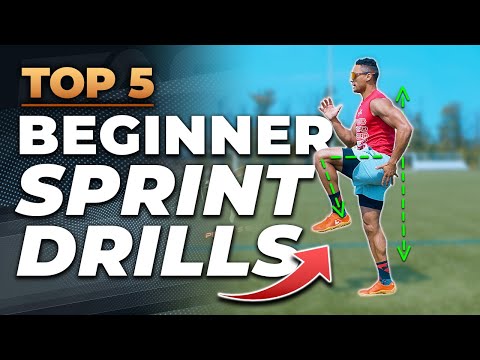
Top 5 Sprint Drills for Beginners - Learn Proper Running Form & Technique (Full Follow Along)

Track & Field / Sprinting
Training ~14 minStart follow-along — free, no signup
Created from “Top 5 Sprint Drills for Beginners - Learn Proper Running Form & Technique (Full Follow Along)” by Pierre's Elite PerformanceWatch original

Top 5 Sprint Drills for Beginners - Learn Proper Running Form & Technique (Full Follow Along) is a curated workout routine with 6 ordered actions and 6 short form clips. Start with Stork Posture Hold and Marches on the Spot with 2s Hold. Review the available targets, sets, coaching cues and rest for each action. Estimated training time is about 14 min; rest is listed per action.

Training ~14 minOriginal video 16:166 actionsSingle training session
Start this session

Follow in order

Action Sequence

Browse all actions
0:00 / 0:14
1

Stork Posture Hold

Sets: 3Reps: 10 repsRest: 45 secClip: 14 sec

Establishes baseline postural alignment and single-leg stability by holding a 90-degree knee drive with strict isometric tension.

Before you start

  • Stand tall with feet hip-width apart and big/second toes pointing straight ahead.
  • Engage the core and squeeze the glute of the stance leg to lock your center of mass.

Movement sequence

  1. Drive one knee upward until the thigh is parallel to the ground at a 90-degree angle.
  2. Actively dorsiflex the lifted ankle, pulling the toes up tightly toward the shin.
  3. Set your arms in opposition: rear hand near the hip pocket, front hand at face/eye socket level with open palms.
  4. Hold this position statically for 20 seconds while keeping the torso long and tall.

Key points

  • Stance leg must remain fully straight without knee buckling.
  • Spine must stay vertical, avoiding any forward rounding or collapsing at the waist.
  • Shoulders and jaw remain completely relaxed despite core and hip flexor tension.

Common mistakes

Rounding over at the chest, bending the supporting knee, or failing to keep the foot directly beneath the hip center of mass.

Practice notes

Perform 20 seconds per side. Essential precursor to all subsequent on-the-spot running mechanics.

0:00 / 0:14
2

Marches on the Spot with 2s Hold

Sets: 3Reps: 10 repsRest: 45 secClip: 14 sec

Develops powerful lower-limb recycling and single-leg balance by marching with a strict two-second isometric pause at peak knee height.

Before you start

  • Adopt an athletic standing posture with a braced core and long, neutral spine.
  • Position feet directly underneath your hips to prepare for vertical force production.

Movement sequence

  1. Drive one knee up to 90 degrees with a dorsiflexed ankle while maintaining opposite arm action.
  2. Hold the top statue-like position rigidly for 2 seconds.
  3. Simultaneously punch the raised foot down underneath your hip while lifting the opposite knee up.
  4. Repeat for 10 repetitions per side without swaying or rocking side to side.

Key points

  • Foot must land directly back underneath the hip rather than reaching forward.
  • Ankle remains cocked and stiff with toes pulled up toward the shin prior to ground strike.
  • Core stability prevents lateral torso sway during the switch.

Common mistakes

Casting or reaching the lead foot out in front of the body, and losing balance/swaying during the 2-second hold.

Practice notes

Execute 2 sets of 10 reps per side. Focus on stiffness and precise foot placement rather than speed.

0:00 / 0:14
3

Hip Switch Jumps

Sets: 3Reps: 10 repsRest: 45 secClip: 14 sec

Builds explosive hip flexor power and vertical lift through a plyometric mid-air leg switch.

Before you start

  • Stand tall with core engaged, hands either on hips or coordinating opposite arm swing.
  • Sink slightly into a loaded posture to prepare for upward propulsion.

Movement sequence

  1. Pull upward through the bottom hip to generate vertical lift and brief air time off the ground.
  2. Rapidly swap leg positions in mid-air so the lower leg aggressively replaces the top leg.
  3. Land with high stiffness, immediately locking into a rigid single-leg hold.
  4. Complete 5 controlled repetitions per side (10 total switches).

Key points

  • Achieve measurable air time to ensure power is generated from the hip rather than just quick shuffling.
  • Crown of the head reaches continuously toward the sky.
  • Instantaneous stiffness upon ground contact.

Common mistakes

Executing a flat-footed shuffle with no vertical lift, or collapsing the torso forward upon landing.

Practice notes

Performed in progressive rounds—start slow for coordination, then increase snap speed on round two.

0:00 / 0:13
4

1-2-3 Triple Switch

Sets: 3Reps: 10 repsRest: 45 secClip: 13 sec

Enhances rhythmic foot-strike frequency and tissue stiffness using a rapid three-touch cadence on the balls of the feet.

Before you start

  • Rise onto the balls of your feet with a dynamic, athletic posture.
  • Engage core stability and align shoulders over hips.

Movement sequence

  1. Lift one knee to the running height position to initiate the drill.
  2. Execute three rapid, rhythmic touches on the spot (1-2-3) while maintaining uniform knee height.
  3. Lock into a momentary stable ISO hold on the third touch.
  4. Repeat the sequence for 3 high-quality repetitions per side.

Key points

  • Knee height must remain consistent across all three touches rather than creeping higher on the final count.
  • Movement must be executed dynamically on the balls of the feet.
  • Upper and lower body maintain synchronized rhythm.

Common mistakes

Performing two shallow bounces followed by a high third knee lift, causing inconsistent movement geometry.

Practice notes

Emphasize quality and precision over conditioning; take ample rest between sets.

0:00 / 0:13
5

Triple Bounce Switch

Sets: 3Reps: 10 repsRest: 45 secClip: 13 sec

Builds ankle/lower-leg stiffness and rhythmic coordination through three consecutive micro-bounces followed by a clean switch.

Before you start

  • Stand tall with one knee elevated at 90 degrees and ankle dorsiflexed.
  • Brace the core and relax the shoulders and jaw.

Movement sequence

  1. Perform three gentle, rhythmic vertical bounces on the supporting leg.
  2. On the third bounce, pull the opposite hip up explosively to switch leg positions.
  3. Establish an immediate isometric hold with the new lead leg at the top.
  4. Complete 5 repetitions per side.

Key points

  • Maintain exact 3-bounce timing before executing the switch.
  • Keep the upper body upright with the crown reaching upward.
  • Ensure clean arm-leg synchronization during the switch.

Common mistakes

Losing rhythm by performing extra bounces, or letting the supporting ankle collapse and soften too much.

Practice notes

Designed to build tissue quality, stiffness, and timing without generating excessive fatigue.

0:00 / 0:13
6

High Knees on the Spot

Sets: 3Reps: 10 repsRest: 45 secClip: 13 sec

Integrates high-frequency knee drive with rapid, compact arm mechanics simulating maximum velocity sprinting.

Before you start

  • Stand tall with feet hip-width apart, core braced, and arms bent at 90 degrees.
  • Visualize a sheet of glass directly behind you to keep elbows driving straight back.

Movement sequence

  1. Drive knees upward sequentially while allowing the heel to travel close to the hamstring/buttock area.
  2. Pump arms rapidly from pocket level up to approximately shoulder height.
  3. Drive elbows backward past the hip pocket rather than opening up the arms too wide in front.
  4. Complete 20 total repetitions (10 per side) maintaining a controlled 50-60 percent pace on round one.

Key points

  • Knees drive forward and up while heels tuck close to the glutes (avoid trailing legs backward).
  • Arm action remains fast, tight, and compact from pocket to shoulder.
  • Torso remains upright without forward dipping or folding.

Common mistakes

Allowing heels to kick out behind the body, over-swinging the arms outward, or rushing into chaotic, uncontrolled speed.

Practice notes

Perform 20 reps per set across two rounds, increasing arm snap and leg speed on the second round.

Video demonstrations are referenced from public platforms for instructional context. TrainFlow is independent and not affiliated with or endorsed by the original content creators.