Curated Routine

Tennis Return Of Serve Drills

Tennis
Training ~5 minStart follow-along — free, no signup
Created from “Tennis Return Of Serve Drills” by Jeff Lewis TennisWatch original

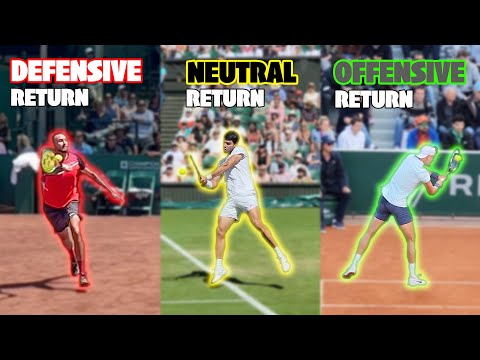
Tennis Return Of Serve Drills is a curated workout routine with 3 ordered actions and 3 short form clips. Start with Neutral Deep Return Target Drill / Direction & Depth Target Practice and Defensive Redirection Drill from the Service Line / Reflex Return Against Fast Pace. Review the available targets, sets, coaching cues and rest for each action. Estimated training time is about 5 min; rest is listed per action.

Training ~5 minOriginal video 4:493 actionsSingle training session
Start this session

Follow in order

Action Sequence

Browse all actions
0:00 / 1:26
1

Neutral Deep Return Target Drill / Direction & Depth Target Practice

Sets: 1Reps: 10 repsRest: 1 minClip: 1 min 26 sec

Practice hitting heavy, deep returns of serve to neutralize the opponent and successfully start a neutral baseline rally when playing against opponents of similar ability levels.

Before you start

  • Set up generic depth targets on the court to aim your returns towards.
  • Find a hitting partner or friend who can serve consistently to practice against.

Movement sequence

  1. Anticipate the incoming serve and execute a split-step as the server impacts the ball.
  2. Take the racket back and set up for a neutral return without feeling overly rushed.
  3. Hit the ball high and heavy towards your designated depth target to neutralize the server and start the rally.

Key points

  • Aim for a heavy, deep return that lands near your depth targets.
  • Ensure the ball has enough height and weight (high and heavy) to neutralize the opponent's advantage.

Common mistakes

For right-handed players on the ad side, favoring the forehand by running around the backhand, which pulls you further outside of the court. Failing to embrace and favor moving to the inside of the court on body serves to your backhand.

Practice notes

The hardest part is finding a partner with the perfect serve to practice neutralizing; the easy part is setting up generic depth targets. Learn to love your backhand and favor moving to the inside of the court rather than running around it.

0:00 / 1:06
2

Defensive Redirection Drill from the Service Line / Reflex Return Against Fast Pace

Sets: 1Reps: 10 repsRest: 1 minClip: 1 min 6 sec

Drill defensive returns against fast, flat first serves by taking the ball early with a more square racket face and compact swing path, avoiding the trap of floating or chipping back weak balls.

Before you start

  • Have a friend or partner stand at the service line and blast fast serves or practice hitting consecutive fast serves at you.
  • Adopt a conservative grip and clean unit turn.

Movement sequence

  1. Perform a split-step timing your preparation against incoming pace.
  2. Utilize a clean unit turn with a conservative grip to maintain a unified returning system.
  3. Get the racket face more square to the incoming ball and take the shot like a volley with a follow-through.
  4. Redirect the big serve back with a shorter swing path and proper weight transfer.

Key points

  • Keep the racket face less open and more square.
  • Ensure your swing path is more in line with the incoming ball.
  • Use a compact backswing and a volley-like action with a follow-through.

Common mistakes

Falling into the trap of thinking you have to slice, chip, or float the return back just to get it in play. Using open grips and loose or complex unit turns that lead to struggles against big servers and fast pace.

Practice notes

Chips are for parties; great returners like Roger Federer get the racket face more square to redirect big serves back with practical purpose. Players who return best against big servers have the most conservative grips and the cleanest unit turns.

0:00 / 0:39
3

Offensive Forcing Return Drill / Attacking Second Serves & Stepping Inside

Sets: 1Reps: 10 repsRest: 1 minClip: 39 sec

Practice hitting aggressive offensive returns when facing slower second serves or lower-level players, treating the return remarkably similar to a forcing shot.

Before you start

  • Identify moments when you have plenty of time to set up, such as when facing a slower dinked or pushed second serve.
  • Set up directional targets down the line or at sharp crosscourt angles.

Movement sequence

  1. Recognize the opportunity when you have ample time to set up your shot.
  2. Step inside the court and take the ball early with an aggressive, forcing swing.
  3. Direct your offensive return either down the line or at an angle crosscourt away from your opponent.

Key points

  • Avoid hitting the ball back up the middle to your opponent.
  • Commit to hitting either down the line or an angle crosscourt.

Common mistakes

Hitting the offensive return back passively or up the middle into the opponent's strike zone. Failing to step inside and treat the ball like a forcing shot when given extra time on second serves.

Practice notes

Treat your offensive return remarkably similar to any forcing shot in singles. Focus on aggressive placement (down the line or sharp crosscourt angles) to put immediate pressure on the server.

Video demonstrations are referenced from public platforms for instructional context. TrainFlow is independent and not affiliated with or endorsed by the original content creators.