Curated Routine

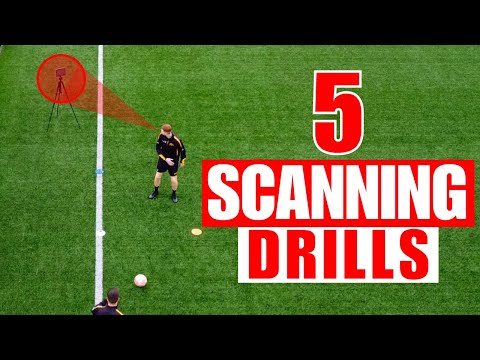
5 Scanning Drills to Improve Football IQ | How to Scan Like a Pro

Soccer
Training ~9 minStart follow-along — free, no signup
Created from “5 Scanning Drills to Improve Football IQ | How to Scan Like a Pro” by Training121Watch original

5 Scanning Drills to Improve Football IQ is a curated workout routine with 5 ordered actions and 5 short form clips. Start with Juggling with High Ball Scan & Color Callout and Short Fence Rebound with Back-Foot Turn & Color Callout. Review the available targets, sets, coaching cues and rest for each action. Estimated training time is about 9 min; rest is listed per action.

Training ~9 minOriginal video 12:115 actionsSingle training session
Start this session

Follow in order

Action Sequence

Browse all actions
0:00 / 1:20
1

Juggling with High Ball Scan & Color Callout

Sets: 1Reps: 20 repsRest: 1 minClip: 1 min 20 sec

Improves scanning under pressure by popping the ball above head height during keep-ups and calling out colors displayed by a partner.

Before you start

  • 2 players with 1 soccer ball.
  • A partner holds colored cones or cards (e.g., white and blue).

Movement sequence

  1. Perform keep-ups below hip height.
  2. Pop the ball above head height periodically.
  3. Scan up during the ball's flight to identify the color shown by the partner.
  4. Call out the color out loud.
  5. Progress to inside-of-foot keep-ups while the partner moves around to constantly challenge eye contact and tracking.

Key points

  • Ball height reaches above head level during pops.
  • Head lifts to scan while the ball is in flight rather than fixating entirely on the ground.

Common mistakes

Fixating entirely on the ball and failing to lift the head to scan during the pop. Losing control of keep-ups when attempting the high ball pop.

Practice notes

Great for warm-ups to build awareness and challenge coordination.

0:00 / 1:52
2

Short Fence Rebound with Back-Foot Turn & Color Callout

Sets: 1Reps: 15 repsRest: 1 minClip: 1 min 52 sec

Develops head movement and scanning away from the ball by receiving a rebound off a fence and calling out a displayed color before playing back.

Before you start

  • Use a fence, wall, or third person as a rebound surface.
  • Set up flat markers/cones to define the working space.
  • One partner holds colored cones/cards.

Movement sequence

  1. Perform a bounce pass in the middle.
  2. Move to one side and open up body shape.
  3. Play the ball into the fence.
  4. Scan the partner holding up a color and call it out.
  5. Receive back on the back foot and play the ball back to the partner.

Key points

  • Open body shape when receiving.
  • Clear head turn to identify the color while the ball travels off the fence.

Common mistakes

Closing off the body shape and receiving on the front foot. Failing to scan while turning with the ball.

Practice notes

Aim for quality over duration; roughly 30-second blocks per working interval.

0:00 / 0:25
3

Extended Distance Wall Pass with Color-Directional Turning

Sets: 1Reps: 15 repsRest: 1 minClip: 25 sec

Increases passing distance and introduces directional turning based on the color scanned during a wall rebound.

Before you start

  • Increase distance from the fence/wall.
  • Set up flat markers where the player arrives between them.
  • Partner holds colored markers or a scanning tool display.

Movement sequence

  1. Arrive between the flat markers.
  2. Turn and play the ball into the fence while scanning.
  3. If blue is shown, turn to the left and play back.
  4. If white is shown, turn in the opposite direction and play back.

Key points

  • Consistent habit of scanning during any turning or passing activation, even unopposed.
  • Clean directional turn based on the visual cue.

Common mistakes

Skipping the initial scan when receiving the first pass from the partner. Sluggish footwork when switching turn directions.

Practice notes

Builds realistic match-range passing and decision-making habits.

0:00 / 0:38
4

Wall Rebound with Body Language & Pressure Reaction

Sets: 1Reps: 15 repsRest: 1 minClip: 38 sec

Replaces color cues with live partner body language and pressure to simulate realistic game reactions.

Before you start

  • Player with the ball and partner stationed near a rebound fence or wall.
  • Flat markers for initial technical setup.

Movement sequence

  1. Perform a bounce pass and touch behind the top flat marker.
  2. Play the ball into the fence and open up.
  3. Read the partner's body language as they either shift right, shift left, or jump to press.
  4. Adjust and pass back based on the partner's movement, or roll out under pressure.

Key points

  • Head up immediately after playing into the fence to read opponent body shape.
  • Effective shielding or rolling out when pressure is applied.

Common mistakes

Ignoring partner positioning and playing blindly into space. Getting caught flat-footed when the partner jumps to press.

Practice notes

Transitions from isolated visual cues to reading real defensive body language.

0:00 / 1:51
5

Dual-Player Rotational Scan with Screen Tool Decision-Making

Sets: 1Reps: 15 repsRest: 1 minClip: 1 min 51 sec

Uses a scanning screen tool (or iPad) to dictate complex decision-making, full turns, and rotational passing patterns with a partner.

Before you start

  • Set up a scanning tool or device displaying colors (white/blue).
  • Cone/flat marker layout for full turns and rotational passes.

Movement sequence

  1. Pass to the partner and scan the screen tool.
  2. If white appears: perform a full turn imagining pressure from the white cone, play back, and bounce at the orange flat.
  3. If blue appears: partner sets/drops out for a second angle, ball is played into the fence, bounced at white, and player dribbles around orange.
  4. Rotate roles and work off both sides and shoulders.

Key points

  • Working off both sides to ensure equal practice for left and right foot reception and shoulder scanning.
  • High intensity and clean technical execution under cognitive fatigue.

Common mistakes

Only scanning and turning over one preferred shoulder/side. Losing technical control of the ball while processing the screen cue.

Practice notes

High cognitive and physical demand; work in 1 to 2-minute high-intensity blocks.

Video demonstrations are referenced from public platforms for instructional context. TrainFlow is independent and not affiliated with or endorsed by the original content creators.