Curated Routine

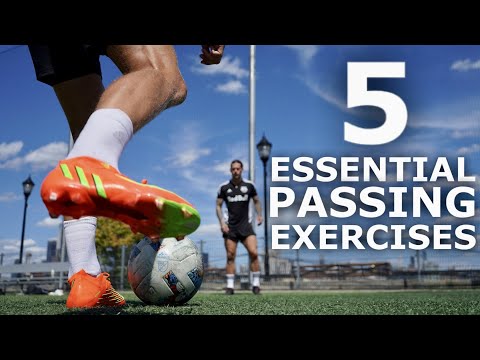
5 Essential First Touch & Passing Exercises | 5 Drills To Improve Your Passing & First Touch

Soccer
Start follow-along — free, no signup
Created from “5 Essential First Touch & Passing Exercises | 5 Drills To Improve Your Passing & First Touch” by 7mlcWatch original

5 Essential First Touch & Passing Exercises is a curated workout routine with 5 ordered actions and 5 short form clips. Start with One-Touch Straight & Diagonal Gate Passing / Crisp Ball Striking & Rhythm and Two-Touch Bump into One-Touch Angled Gate Pass / Set & Release. Review the available targets, sets, coaching cues and rest for each action. Targets and rest are listed per action.

Original video 8:025 actionsSingle training session
Start this session

Follow in order

Action Sequence

Browse all actions
0:00 / 0:52
1

One-Touch Straight & Diagonal Gate Passing / Crisp Ball Striking & Rhythm

Sets: 3Reps: 20 repsRest: 30 secClip: 52 sec

Players practice continuous one-touch passing and footwork rhythm, where one player passes straight and the opposite player passes diagonally through a two-cone gate, reversing roles midway through the drill.

Before you start

  • Set up two cones as a gate between passing partners.
  • Players face each other in an athletic, ready stance with quick footwork shuffling.

Movement sequence

  1. Player A passes the ball straight while shuffling on feet.
  2. Player B passes the ball at an angle through the two-cone gate.
  3. Keep the ball flowing continuously with one-touch passing.
  4. Communicate halfway through to reverse the passing roles.

Key points

  • Keep the ball on the ground as much as possible.
  • Listen for the crisp sound of the ball to gauge strike quality.
  • Fix bobbling balls as quickly as possible.

Common mistakes

Allowing the ball to stop instead of keeping it flowing. Hitting passes with poor technique, resulting in a dull sound.

Practice notes

Focuses on crisp ball striking, rhythm, and active footwork. Communication is key before switching passing angles.

0:00 / 1:04
2

Two-Touch Bump into One-Touch Angled Gate Pass / Set & Release

Sets: 3Reps: 16 repsRest: 30 secClip: 1 min 4 sec

A progression of the first exercise where players play two straight bump passes followed by a third pass played at an angle through the gate.

Before you start

  • Maintain the cone gate setup from the first exercise.
  • Players remain active on their toes, ready for continuous one-touch exchanges.

Movement sequence

  1. Play two consecutive straight one-touch passes.
  2. On the third pass, send the ball at an angle through the cone gate.
  3. Continue the sequence and communicate to switch roles or directions.

Key points

  • Maintain a steady rhythm across the three-pass sequence.
  • Keep all passes clean and on the ground.

Common mistakes

Losing count or rhythm when transitioning from straight to angled passes. Letting the ball bobble excessively.

Practice notes

Builds passing pattern recognition and timing. Encourages sharp focus under continuous movement.

0:00 / 1:09
3

Check-In Bump to Across-Body Outside-Foot Cone Cut / Directional Touch

Sets: 3Reps: 12 repsRest: 30 secClip: 1 min 9 sec

Players check in to receive a soft pass, backpedal slightly for a firmer pass, take a directional touch across their body behind the cone using the outside of the foot, and return a pass.

Before you start

  • Cone set up to mark the turning point.
  • Players start facing their partner with active footwork.

Movement sequence

  1. Check in to receive a soft pass.
  2. Backpedal slightly to receive a second, firmer pass.
  3. Take a directional touch across your body behind the cone using the outside of the foot.
  4. Play the pass back to your partner.
  5. Communicate halfway through to reverse direction.

Key points

  • Use soft cushioning on the first touch and a firm outside-foot touch behind the cone.
  • Ensure body shape opens up across the cones.

Common mistakes

Taking too heavy of a touch, exposing the ball. Failing to backpedal adequately before receiving the second pass.

Practice notes

Enhances directional control and tight-space turning. Working in both directions ensures balanced development.

0:00 / 1:08
4

Check-In Bump to Back-Foot Inside Cut Behind Cone / Opening Body Shape

Sets: 3Reps: 12 repsRest: 30 secClip: 1 min 8 sec

Follows the same pattern as exercise three, but the directional touch behind the cone is taken with the back foot using the inside of the foot.

Before you start

  • Cone setup identical to the previous exercise.
  • Players remain on their toes ready to check in.

Movement sequence

  1. Check in to receive a soft pass, then backpedal slightly for a firmer pass.
  2. Take a directional touch behind the cone using the inside of your back foot.
  3. Play the pass back with that same foot.
  4. Communicate halfway through the drill to reverse direction.

Key points

  • Use the inside of the back foot to push the ball cleanly behind the cone.
  • Maintain a proper body shape to open up the field.

Common mistakes

Using the wrong foot or failing to open the body shape adequately. Rushing the touch without checking shoulders.

Practice notes

Improves back-foot reception and inside-foot directional control. Crucial for opening up passing lanes under pressure.

0:00 / 1:27
5

Double Bump, Shoulder Scan & Cone Dribble Sequence / Scanning Under Pressure

Sets: 3Reps: 10 repsRest: 30 secClip: 1 min 27 sec

Players bounce passes on either side of a front cone, backpedal into space, receive with the back foot, perform a quick shoulder scan, dribble around the cone, and return to one-touch and two-touch passing sequences.

Before you start

  • Front cone marker in place between partners.
  • Players positioned for dynamic movement and rapid footwork.

Movement sequence

  1. Bounce passes either side of the front cone.
  2. Backpedal into space and receive the ball with the back foot.
  3. Execute a quick shoulder scan / head scan before receiving.
  4. Dribble around the cone using both feet.
  5. Incorporate two back-foot touches and return to passing.

Key points

  • Perform a mandatory shoulder check / head scan before receiving.
  • Control the ball tightly around the cone using both feet.
  • Execute smooth weight transfer and firm passing.

Common mistakes

Skipping the shoulder scan before receiving. Losing control of the ball during the tight dribble around the cone due to high speed.

Practice notes

Advanced drill challenging control, awareness, and scanning in tight areas. Start slowly to master the pattern before increasing speed.

Video demonstrations are referenced from public platforms for instructional context. TrainFlow is independent and not affiliated with or endorsed by the original content creators.